Baxter Brewing Earns Green Brewery Recognition from BetterBev
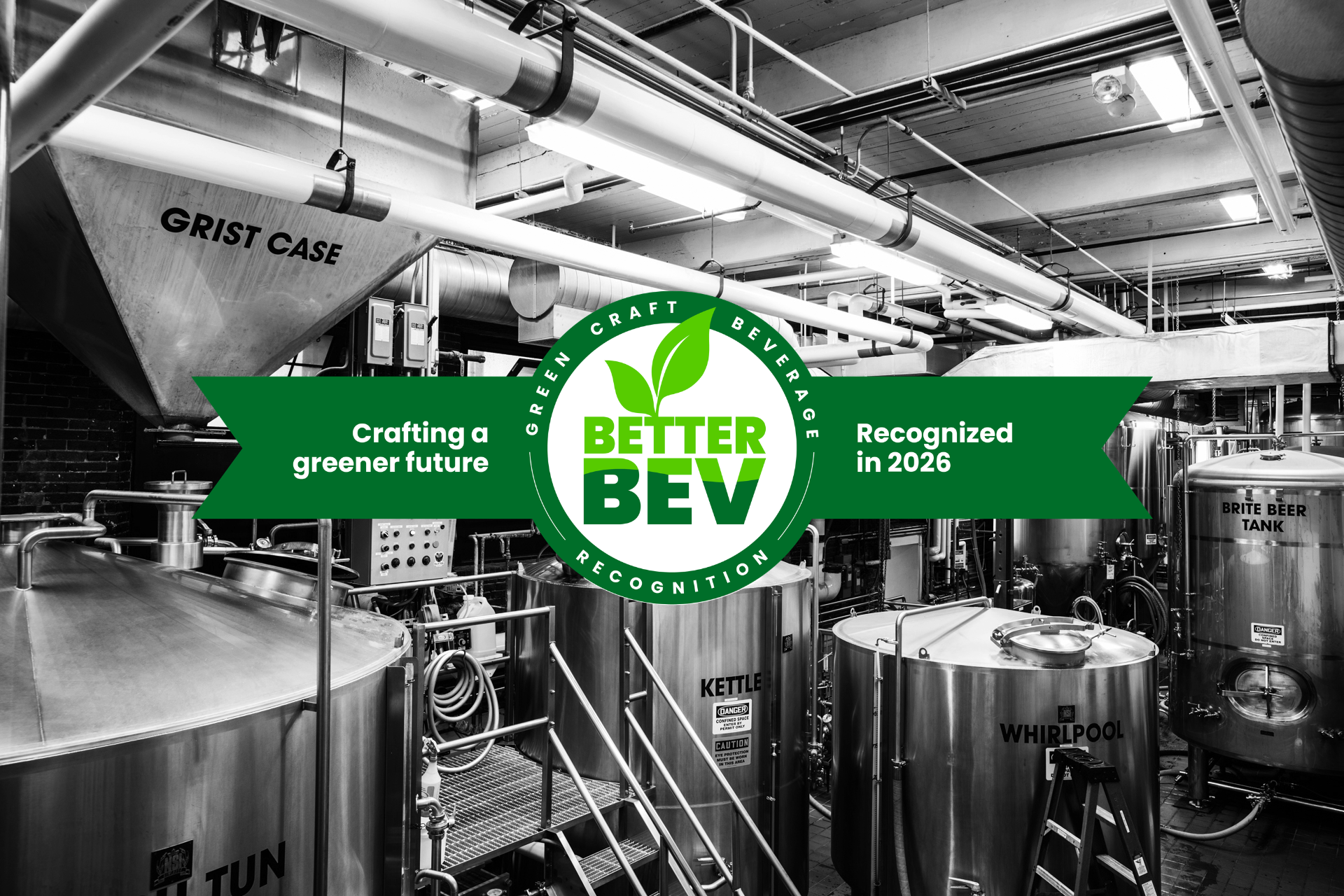
At Baxter Brewing, making great beer means paying attention to more than what goes into the glass. It also means looking at how we use our resources, where we can improve efficiency, and how we can make thoughtful choices throughout the brewing process.
That work recently earned Baxter Green Brewery recognition from BetterBev, an industry program that recognizes breweries for their efforts to improve environmental practices and resource efficiency.
Baxter earned a score of 71 points, surpassing the 69-point threshold required for BetterBev Recognition. We’re proud of the recognition, but even more proud of the practices behind it.
Brewing With Efficiency in Mind
Water and other resources are essential to brewing, which makes finding ways to use them efficiently an important part of our day-to-day operations. At the end of our brewing process, we use a heat exchanger to conserve energy and water by transferring heat from hot wort (unfermented beer) into fresh water, warming the water without the two ever mixing. Instead of letting that warm water go down the drain, we save it and use it for the next brewing and cleaning jobs around the brewery. It’s a simple way to reuse water, save energy, and get more out of every gallon we use. In the packaging hall, we’ve implemented ionized air can-rinsing technology, an approach that helps reduce water use during the canning process. These small processes have a huge impact. We use 3.5 gal of water to produce a gallon of beer, beating the industry average of 5.7 gallons of water per gallon of beer.
Baxter has implemented standard operating procedures designed to conserve resources, improve efficiency, and reduce waste throughout the brewery. Cardboard, grain bags, aluminum, and other hard-to-process items are separated through no-sort recycling, such as Pack Techs are carefully separated and recycled rather than sent to the landfill. These waste side-streaming practices significantly reduce the amount of waste Baxter produces, with only approximately three bags of general waste sent to the landfill each week. The team continues to look for opportunities to improve efficiency and make better use of the resources involved in producing our beer.
One example is what happens to our beer trub, the sediment left behind during the brewing process. Rather than treating it as waste, Baxter sends its trub to anaerobic digesters at the Lewiston-Auburn Clean Water Authority’s wastewater treatment facility. The trub helps generate renewable electricity, producing approximately 1,753,771 kWh of clean electricity. That is enough to power the equivalent of approximately 267 Maine households. The anaerobic digesters also generate waste heat, providing enough energy to heat the equivalent of approximately 78 Maine households.
And sustainability doesn’t stop at our own brewery.
Baxter shares the efficiency measures and practices we’ve developed with colleagues throughout the craft beer industry. By exchanging ideas and lessons learned, we can help encourage more efficient practices across the industry.
BetterBev recognized Baxter for these efforts, and we’re honored to be included among breweries working to make environmental responsibility a greater part of craft brewing. Baxter looks forward to continuous improvement and doing our part on the path to a greener future!
Cheers to brewing better and doing our part along the way.
